
In Auto run, you only swing
In Auto run the kids run to the ball on an exact prediction of where it'll land, and you only swing: tap for a dink, swipe sideways to drive, up to lob, down to smash.
Case study
Pickleball for new players, with the real scoring
A doubles pickleball game with several shot types that plays easily on a phone. It's free to play here and in the Ziggy Games arcade, and it keeps score the way real players do, with side-out scoring.
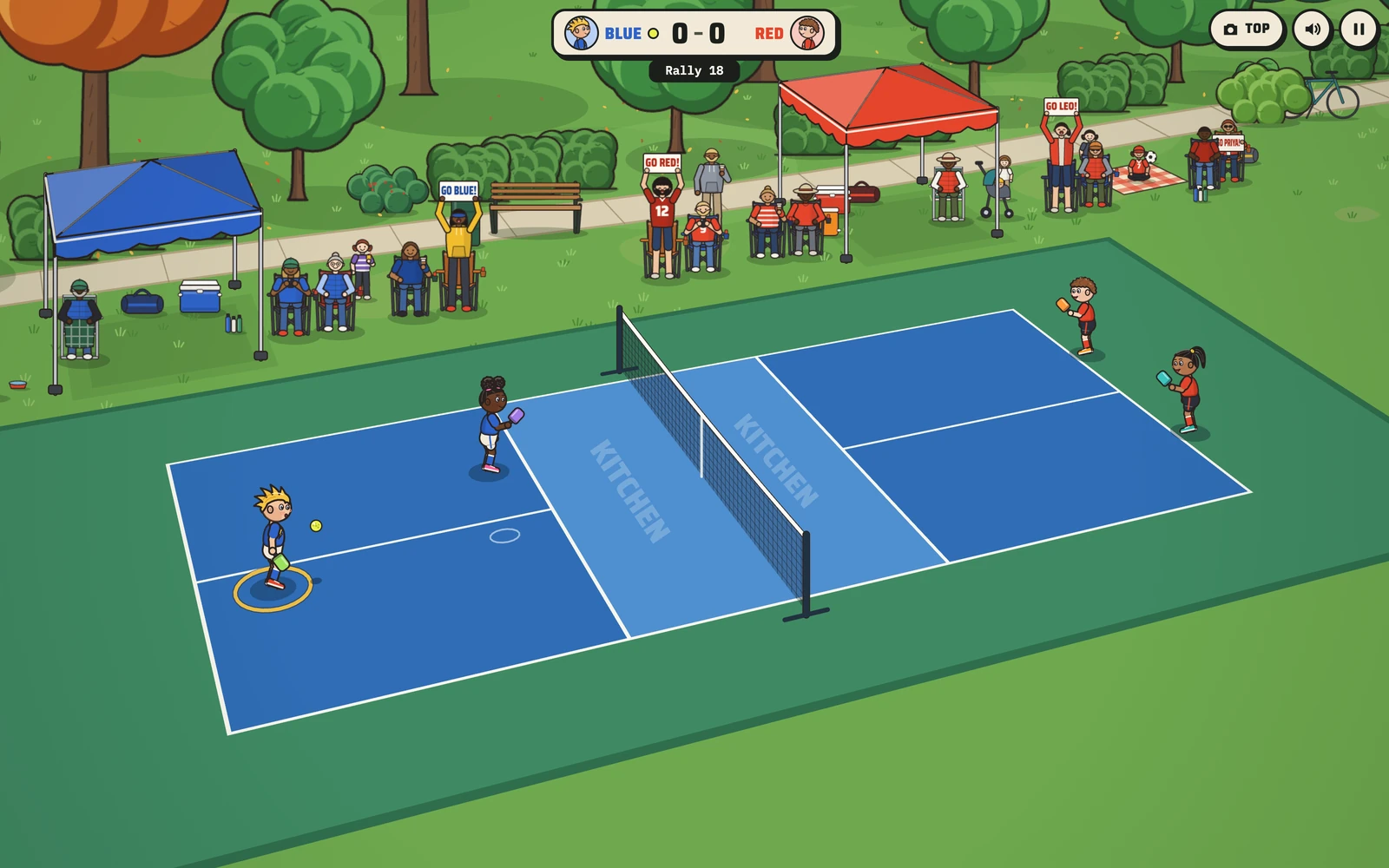
Ziggy's family asked for a pickleball game called Pickle Kids, with several kinds of shots and an easy mode where the kids run themselves and you just swing. A paddle sport plays nothing like soccer or hockey, so the game underneath had to change a lot, while the kids, the park and the controls could carry over.
In Auto run the kids run to the ball on an exact prediction of where it'll land, and you only swing: tap for a dink, swipe sideways to drive, up to lob, down to smash.
The kids are drawn from the side, so a camera straight behind the baseline would show everyone edge-on. The court is shown at an angle from behind your end, where every kid still looks right.
With real gravity, gentle kid-strength shots dropped in at head height and every rally turned into smashes. We turned gravity down, gave fast shots a set flight time, and slowed kids running backward so a good lob can beat them.
Games go to 7 by default, with 11 as an option, win by 2. Blue is Ziggy and Maya, Red is Leo and Priya.
Each round started with the family playing the latest build and asking for what came next, and our team built it. Words in quotation marks are the family's own, as recorded in the build notes.
The ask
Add a Hit button you hold longer to hit harder, a Dink button, and joystick play.
What we built
Touch screens can't read pressure, so hold time became power and Hit swings when you let go. Simple, Advanced and Auto run styles arrived, and the kid the ball is heading to is highlighted.
The family's note
“One player and a computer teammate vs two computers.”
What we built
You play the first kid on your team. The teammate runs, hits and serves on its own, and Simple mode walks your kid back into position when you let go of the stick.
The ask
Compact buttons, so more of the court shows.
What we built
The buttons got smaller and fade to see-through a moment into a game, so they cover less of the court, and the overhead camera zoomed out.
The family's note
“Two serves per side with the exception of the first serve.”
What we built
The game moved to real side-out scoring: only the serving team scores, the game starts at 0-0-2, and after a side out the right-side kid serves first.
Phones can't tell how hard a finger presses, so hold time stands in for power and the release is your timing. A tap is a gentle drive that takes 1.15 seconds to cross; a full hold is a 0.6 second rocket that skims the net and strays more.
The test bot's timing spread is the dial that matters most, more than its shot choice. In Auto run on Medium it won 13, 5 and 1 of 14 games at spreads of 0.06, 0.10 and 0.15 seconds, and that set where each level sits.
Side-out scoring has a server swap after each point, a partner serve after a lost rally and a side out after the second. The game tracks all of it and calls the score before every serve, and the test helpers take their turns to serve just like real players.
Pickle Kids is built on the same engine, keeping the kids, the park art, the sound and the touch controls. The sports code is new: ball flight with drag, bounces and the net, and a shot solver that finds the launch for a chosen landing spot and flight time.
A separate simulation holds the rules, the serve rotation and the swing window, and the computer decides which kid meets each ball. Balance is set with Node bots, and the touch checks use two real fingers at once.
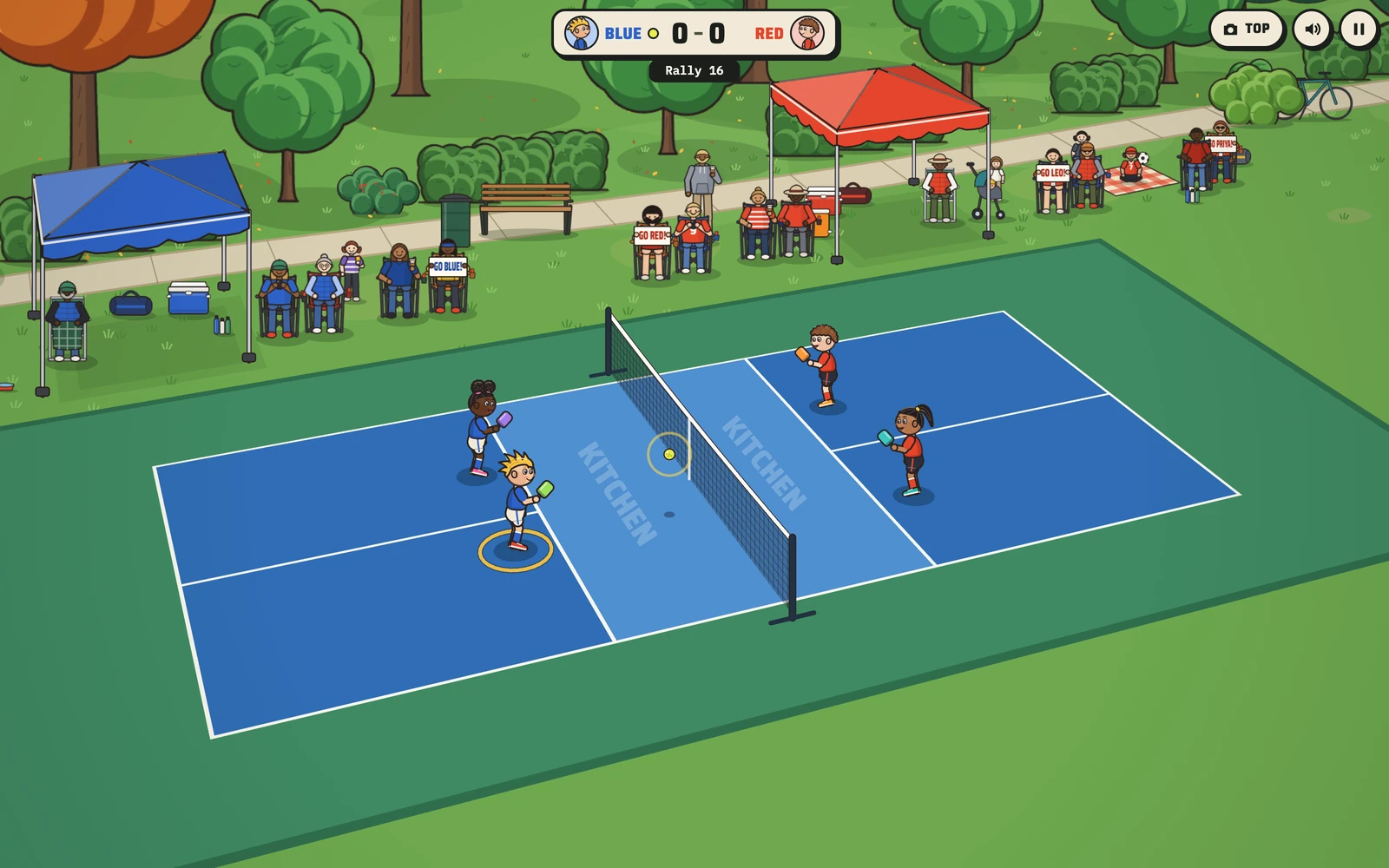
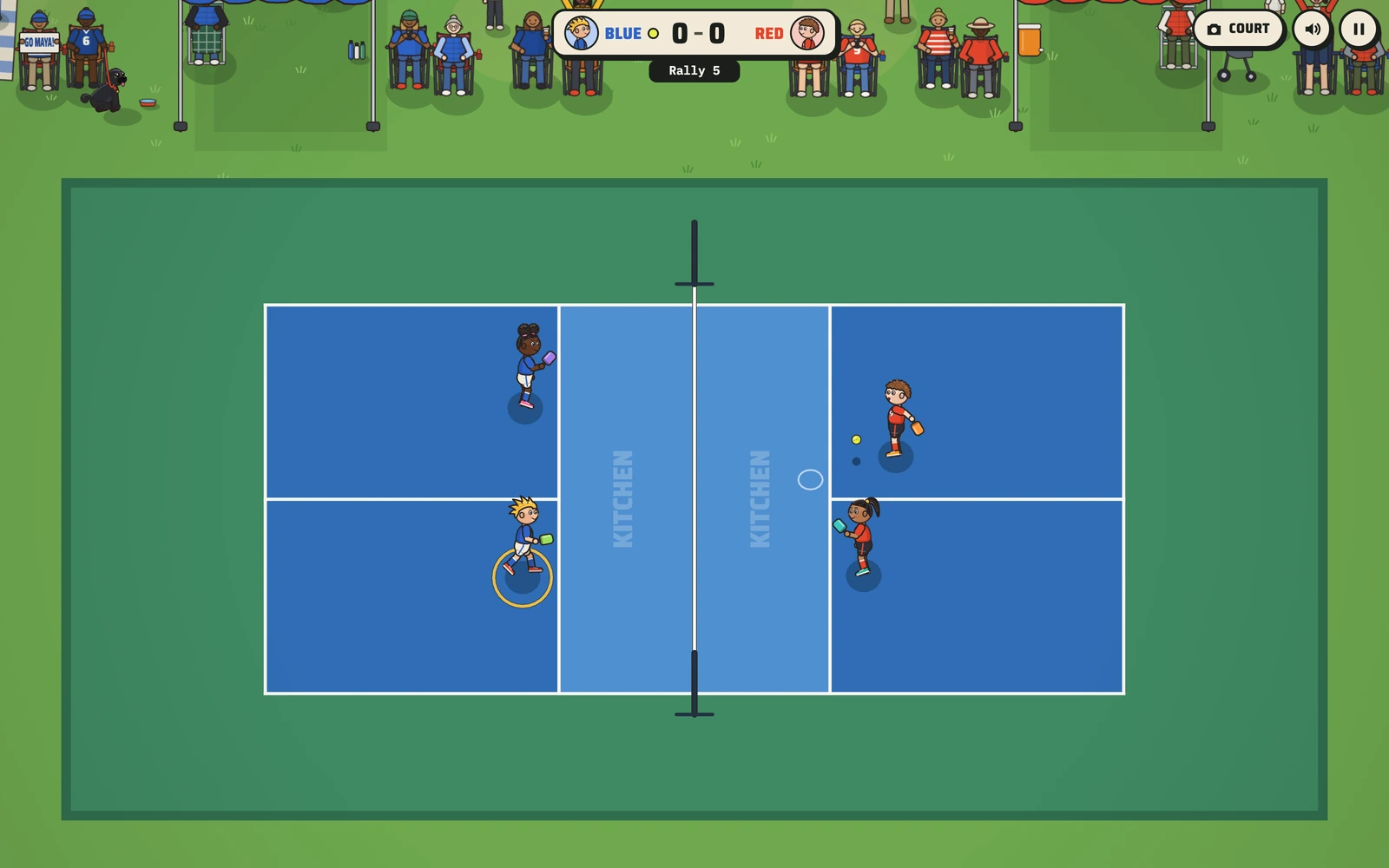
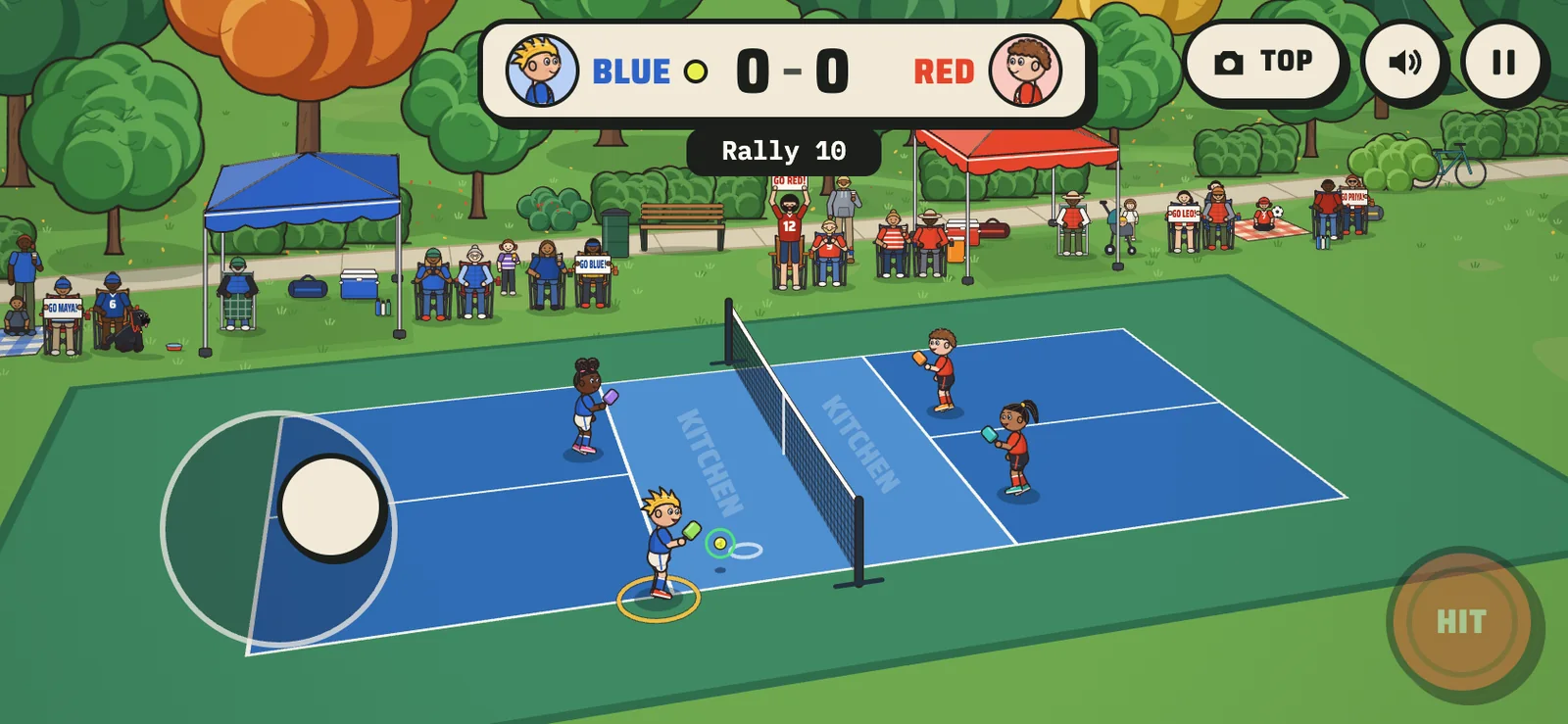
After round three it went live on ziggy.games.
Real side-out scoring arrived in round four and went live the same day.
A second human player and a practice mode are the next ideas on the list.
What this means for your game
Even a sport that plays nothing like soccer fits the engine. If your kid plays it, we can probably build it, with the real rules taught by playing them.
We build games around one kid, one team or one school, the same way we built this one: with the people who will play it in the loop. Start with your player.